



Why Outdoor Puppy Training Matters — What Happens If You Skip It
We had a call this week from a dog owner at their wit’s end.
Their puppy wouldn’t walk calmly on the lead. Wouldn’t come back when called. They’d done everything right — found a local puppy class, turned up every week, done the homework. They were genuinely upset, because they’d tried.
The problem wasn’t effort. The problem was where they’d been training.
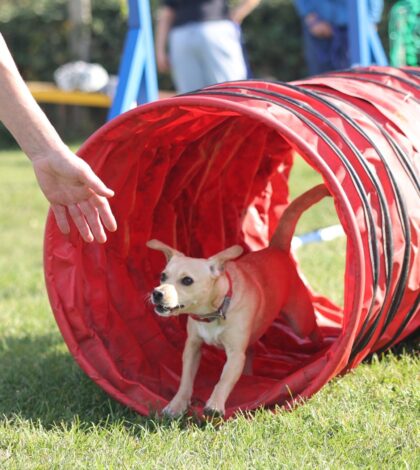
Every single puppy training session had been indoors.
Why indoor training feels like it’s working
A village hall is, in training terms, almost artificially easy. There are no ‘real life’ distractions. No interesting smells.
Of course your puppy can walk calmly on a lead, or comes back to you when called. What else is there for it to do? It’s the easiest environment they’ll ever be asked to perform in. It can also be one of the hardest environments for you to learn in as many dogs or pups don’t feel comfortable, confined indoors, so a lot of them bark constantly.
The real life problem is, your puppy doesn’t live in a village hall. And the skills they’ve learned in that controlled, distraction-free space don’t automatically transfer to the real world — because the real world is nothing like it. Pups also cue in the environment when they train, so what they learn with a solid floor, or a warm carpet underneath their feet, has little or no meaning when they have grass or tarmac under their feet.
What happens when you step outside
The first time many indoor-trained puppies encounter a proper outdoor environment, it’s like the training never happened. The recall that worked perfectly on a Tuesday evening disappears entirely when there’s a pheasant in the hedge, or another dog running on the other side of the park. The loose lead walking evaporates the moment they get into a park with all the sniffs and smells.
This isn’t the owner’s fault. And it isn’t the puppy’s fault either. It’s simply that the puppy was never taught those skills in the environment where they actually matter.
Then adolescence arrives
If the foundations aren’t properly laid outdoors — in real conditions, with real distractions — adolescence will find every gap in them.
Between roughly six and eighteen months, dogs go through a period where previously reliable behaviours can become significantly less reliable. It’s normal, it’s hormonal, and it happens to almost every dog. But if your recall and lead walking were only ever taught in a hall, with no strong, solid reinforcement outdoors, then adolescence will expose that very quickly. It’s like building a house on a bed of sand. It might stand for a while, but when the ‘wind blows’ it will topple over, very quickly.
Getting those foundations right early, in the right environment, is the single best thing you can do to get through adolescence with your sanity intact.
What outdoor training actually builds
Training outdoors from the start teaches your puppy to focus on you even when the world is offering something more interesting. That’s the real skill. Not sitting perfectly in a quiet room — but choosing you, consistently, when there are a hundred reasons not to.
That’s what makes training stick in real life.
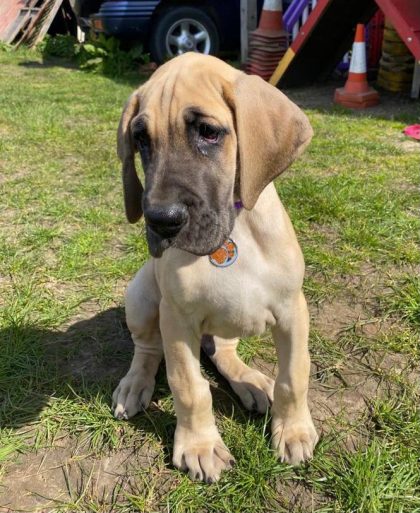
At The NDTA, we train outdoors. On purpose.
Our training field is full of precisely the kind of distractions your dog is going to meet every day of their life. We train around those distractions to ensure you get ‘real life’ training in place from the start.
If you’ve got a puppy and you want to get the foundations right from the start — before the habits you don’t want have a chance to take hold — take a look at our puppy classes.
Puppy Training Classes – click her for information